


A traffic accident happens faster than you think. Suddenly there's a crash, your pulse races, and your mind is in chaos. In my daily practice as a specialist lawyer for traffic law, I experience it again and again: clients who make crucial mistakes in the first few minutes after an accident – and thereby cost themselves hard cash and important claims.
That's precisely why I wrote this guide. Not as a dry legal treatise, but as a practical manual that will genuinely help you in a real-life situation.
The 8 most important steps after a road traffic accident
Whether it's a rear-end collision on the A4, a parking ding in Dresden's Old Town, or a serious crash on a country road — the following steps apply nationwide and in every situation.
Step 1: Stay calm and secure the accident scene
It sounds trivial, but it's the most common mistake: panic. Switch on your hazard lights, put on your high-visibility vest, and set up your warning triangle (50 metres in built-up areas, 100 metres outside built-up areas, 150–200 metres on the motorway). If anyone is injured, call emergency services on 112 immediately.
Step 2: Check for injuries and administer first aid
First, examine yourself, then the other parties involved. Even seemingly minor complaints such as neck or headaches should be taken seriously — whiplash injuries often only show symptoms hours later. My tip: Get a medical examination on the day of the accident. This is not only medically sensible but also legally important for later Claims for damages.
Step 3: Secure evidence — Photos, photos, photos
Your smartphone is your most important tool at the scene of an accident. Take photos of:
- The overall situation from different perspectives
- All vehicle damage in detail
- Skid marks, shards of glass, road markings
- Road signs and traffic lights nearby
- Registration numbers of all vehicles involved
- Weather conditions and lighting conditions
One of my clients once won his case solely on the strength of a photograph showing a hidden give-way sign. The council had positioned it so inconveniently that it was barely visible – without the photo, this would never have been proven.
Step 4: Exchange data
Exchange the following information with the other party involved in the accident:
| What you need | Why it's important |
|---|---|
| Name and address | For the assertion of claims |
| Insurance and insurance number | For direct claim notification |
| Number plate | Identification via the central register is possible |
| Driving licence number | Proof of driving entitlement |
| Witnesses (Name, Telephone Number) | Independent confirmation of the sequence of events |
Important: Do not admit fault at the scene of an accident. Even saying „I'm sorry, I didn't see you“ can be used against you later.
Step 5: Call the police – yes or no?
In cases of personal injury, the police are mandatory. However, even with pure property damage, I almost always advise my clients to involve the police. The reason for this is that a police accident report is strong evidence that can hardly be disputed later on. Exception: For minor bumps and scrapes, a European accident report is sufficient, which you should ideally always keep in your glove compartment.
Step 6: Create an accident report
Note down the exact sequence of events from your perspective as quickly as possible – ideally at the scene of the accident. The fresher the memory, the more accurate the documentation. This personal account can be a building block that might be worth its weight in gold in court weeks later.
Step 7: Inform insurance
Report the accident to your car insurance within a week. When Opposing insurance assert your rights if you Innocent in the accident were involved. But be careful: don't sign anything that the other party's insurance company presents to you without having it checked first. Insurance companies regularly try to reduce claims - I experience this almost every day.
Step 8: Involve a lawyer
At the latest when the opposing insurance company reduces your claim, a driving ban is imminent, or compensation for pain and suffering is on the cards, you should seek legal advice. Specialist lawyer for traffic law to switch on. But legal advice can also be useful beforehand — for example, to clarify whether you are entitled to a hire car, compensation for loss of use, or damages for pain and suffering.
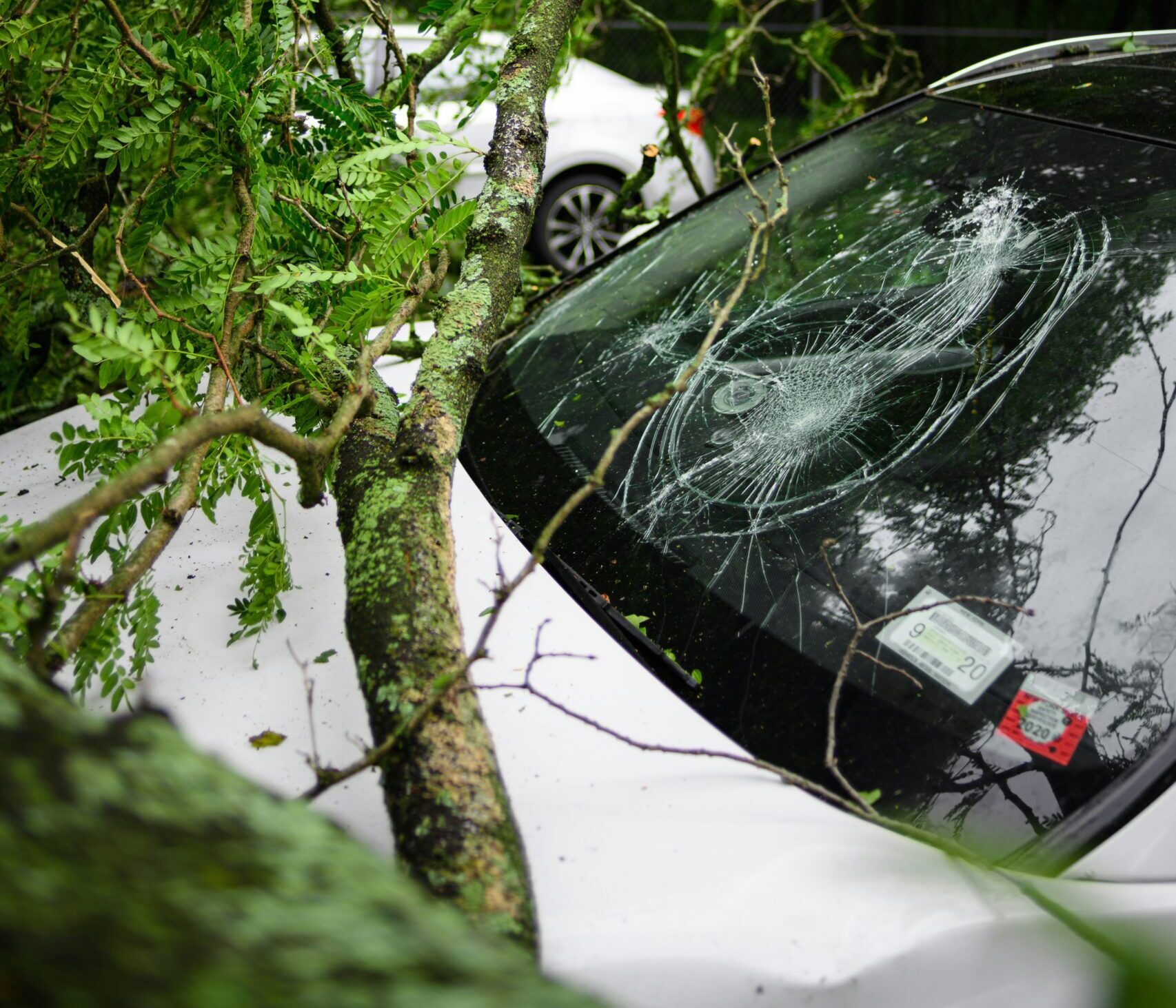
These are your entitlements following a road traffic accident
Many accident victims don't even know what claims they are actually entitled to. Here is an overview of the most common items that I enforce for my clients:
- Repair costs or replacement value in the event of a total loss
- Car hire costs for the duration of the repair
- Compensation for loss of use, if you don't get a rental car
- personal injury compensation in case of injuries — including whiplash injuries
- Loss of earnings, if you are unable to work due to the accident
- Household management damage, if you can no longer manage the household
- Depreciation depreciated value of the repaired vehicle
- Towing charges, surveyor's fees, solicitor's fees
From my experience, the opposing insurance company almost never voluntarily pays out everything you're entitled to. Reductions are regularly made, especially concerning compensation for pain and suffering and loss of use. On average, a solicitor will secure significantly more for you than you would achieve on your own – and the costs are usually borne by the other side.
Received a fine notice? Here's how to respond correctly
Besides accidents, penalty notices are among the most frequent reasons clients come to me. Whether speed cameras on the motorway, running a red light or using a mobile phone while driving — not every notice is correct.
When an objection is worthwhile
An objection might be worthwhile if:
- The measurement was technically faulty (incorrect measuring device, expired calibration)
- You were not the driver (owner ≠ driver)
- There are formal errors in the notice (incorrect information, missing signatures)
- The delivery was delayed
- The statute of limitations has expired (3 months for minor offences)
The objection period is only 14 days delivery. So act fast. On my page to Contesting a fine notice Find out more details.
Current Fines Overview 2026
| Breach | Fines | Points | Driving ban |
|---|---|---|---|
| Speed 21–30 km/h over the limit (outside built-up areas) | 150 euros | 1 | — |
| Speed 31–40 km/h over the limit (outside built-up areas) | 200 euros | 1 | 1 month |
| Red light violation (under 1 second) | 90 euros | 1 | — |
| Red light violation (over 1 second) | 200 euros | 2 | 1 month |
| Mobile phone at the wheel | 100 EUR | 1 | — |
| Drink-driving (0.5–1.09 per mille) | 500 Euros | 2 | 1 month |
| Drink-driving (repeat offence) | £1,000–£1,500 | 2 | 3 months |
Driving ban looming? What you can do
A driving ban hits professional drivers, commuters, and the self-employed particularly hard. However, in certain cases, there are ways to avert a driving ban or convert it into a higher fine – for example, if you can prove that losing your driving licence endangers your professional existence.
Also the so-called Postponement of the driving ban It's possible: you can arrange for it to fall within your holiday period. Please speak to me in good time – the sooner, the more options we'll have.
Driving licence revocation: When and how you can fight back
While a driving ban is time-limited (1–3 months), losing your driving licence means the complete revocation of your driving permit. This typically happens in cases of:
- Driving under the influence of alcohol with a blood alcohol content of 1.1 per mille and above
- Reaching 8 points in Flensburg
- Drug driving
- Serious road traffic offences (e.g. hit-and-run with personal injury)
After your licence has been revoked, you will need to reapply for it. Often, an MPU (medical-psychological examination) is required. I can advise you on how to potentially shorten the ban period and successfully pass the MPU. More on this on my page regarding Fine proceedings and driving licence law.
Legal expenses insurance: Will the insurance pay for my lawyer?
Good news: If you have legal expenses insurance for motoring matters, this usually covers the full legal and court costs. I will take care of the cover request with your insurance provider – you won't have to worry about it yourself.
And if you don't have legal expenses insurance? In the event of an accident that was not your fault, the other party will cover your legal costs. For fine proceedings, I work with transparent flat fees, so you know exactly what to expect from the outset.

5 typical mistakes after a road traffic accident
From my many years of experience as a specialist lawyer, I would like to warn you about the most common mistakes I encounter in practice:
- Admission of guilt at the scene of the accident „I didn't see you“ or „That was my mistake“ – statements like these are recorded and later used against you.
- No evidence secured If you don't take photos and don't note down witnesses, you're in a weak position in court.
- Late medical examination Claims for compensation are difficult to enforce if the first doctor's visit is weeks after the accident.
- Settlement offer from the insurance company accepted too quickly: Insurers often quickly offer a low amount. Whoever signs waives all further claims – including long-term consequences.
- Deadlines missed The objection period for a penalty notice (14 days) or the statute of limitations for damages (3 years) – whoever acts too late loses their claims.
Frequently asked questions about traffic accidents
What must I do immediately after a traffic accident?
Do I always have to call the police after an accident?
What claims do I have after a road traffic accident through no fault of my own?
Is it worth appealing against a fine?
Is it possible to get around a driving ban?
What does a traffic lawyer cost?
When do claims for damages expire after an accident?
Do I need a solicitor if the insurance company is settling the claim?
My offer to you
If you're unsure about what to do after a traffic accident, or if you've received a penalty notice that you believe is unfair, get in touch. I'll review your case and honestly tell you if legal assistance is worthwhile. After all, not every case needs to go to court. But every client deserves to know their rights.
Attorney Martin Reichelt
Specialist lawyer for traffic law
Arrange a consultation now | More about the law firm
Further information
- Specialist lawyer for traffic law Dresden — In-person personal advice
- Traffic Accident Lawyer - Settlement of claims and compensation for pain and suffering
- Contesting a fine notice — When an objection is worth it
- Claims settlement — Your entitlement to full compensation
- Accident through no fault of your own — Your rights and claims
- Fine proceedings and driving licence law
This article is intended to provide general information and does not replace individual legal advice. For an assessment of your specific case, please arrange a consultation with lawyer Martin Reichelt.